How Much Is Your Home Worth?

Contact
Keller Williams Milwaukee Southwest
License #: 53008-94
License #: 268528
2665 S Moorland Rd #104, New Berlin, WI 53151
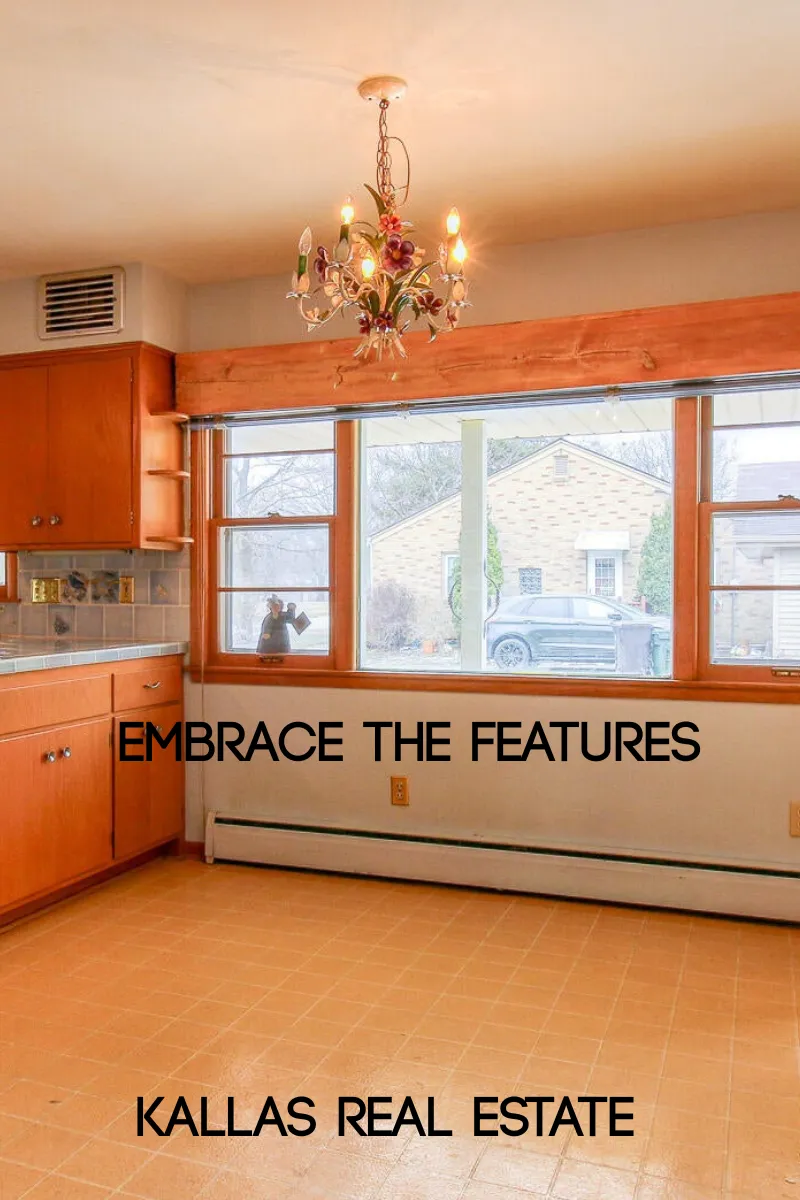
The Executor's Blueprint: How to Sell an Estate Home in Milwaukee & Waukesha Without Losing Your Margins
The Executor’s Blueprint: How to Manage, Market, and Sell an Estate Home Without Losing Your Mind (Or Your Margins)
In 25 years of selling real estate in the Waukesha and Milwaukee markets, I have seen hundreds of estate properties. And over time, I have noticed a massive disconnect between how people talk about inherited homes and what actually happens behind closed doors.
When people talk about selling an estate, the narrative is almost always emotional. It is framed as a tearful goodbye to a childhood home filled with deeply cherished memories.
But if you are actually the executor of an estate, you know the reality is often very different.
For many sellers, there is no deep emotional attachment to the physical structure. They never lived there. They have their own homes, their own families, and their own demanding careers. To them, the inherited property is not a museum of childhood memories—it is a massive, looming project. It is a house full of decades of accumulated belongings, complicated family dynamics, and a ticking clock of property taxes and maintenance costs.
The primary emotion isn’t grief over the drywall. It is logistical overwhelm.
Recently, I worked with a seller to list a home in South Milwaukee. It was a classic mid-century ranch, built in 1959, boasting 2,165 square feet, 3 bedrooms, 1 full bath, and 2 half baths. On paper, it was a fantastic piece of real estate. But getting it to the closing table required navigating a maze of physical, logistical, and timeline hurdles.
It took about a year from my first contact with the family until we finally put the sign in the yard. But when we did, the property had 14 showings, received multiple offers, and sold in its first weekend at the full asking price of $349,900.
We didn’t achieve that result by accident, and we certainly didn't do it by following the standard real estate playbook of gut-renovating the house before listing. We did it by following a strict, three-phase framework designed specifically for estate properties.
If you are an executor staring down the barrel of an inherited home in the Milwaukee or Waukesha area, here is the exact blueprint of how we managed the logistics, protected the estate’s ROI, and let the home’s original character do the heavy lifting.
Phase 1: The Logistics and the "Waiting Game"
One of the biggest mistakes agents make when working with executors is applying standard, high-pressure real estate timelines to a probate situation.
When a standard homeowner decides to sell, they usually want to be on the market in three weeks. When an executor takes over a property, three weeks is barely enough time to figure out where the utility bills are being mailed.
In the case of this South Milwaukee home, I initially reached out to the family because the property was moving through probate. I already had a built-in layer of trust with the sellers because they had seen my signs and my marketing; I had successfully sold the house directly across the street from them. They knew I was an active, local professional, not a random voice on a cold call.
But even with that trust established, the house was nowhere near ready to sell.
First, there was a massive cleanout required. The home was packed with years of belongings that needed to be sorted, donated, tossed, or packed. Second, there was a complex family dynamic at play: another family member was currently living in the home.
As a real estate agent with two decades of experience, I know that you cannot rush family logistics. You cannot bully an estate into moving faster than the realities of the cleanout and the occupants will allow.
"The highest value a real estate agent can provide to an executor in the early stages is not a listing contract. It is patience, operational guidance, and professional distance."
During that year-long waiting period, my job was simply to act as the project manager in the wings. I didn’t push for a listing date. Instead, I operated on a systematic follow-up schedule. I called them periodically to check in. I asked how the cleanout was going, inquired if they needed vendor recommendations for dumpsters or moving companies, and simply monitored their progress.
When you are managing an estate, decision fatigue is your biggest enemy. You are answering questions from probate attorneys, dealing with family members asking about their inheritance, and spending your weekends hauling heavy trash bags out of a basement. The last thing you need is a real estate agent breathing down your neck.
By staying in touch without applying pressure, I allowed the sellers to handle the heavy lifting of the occupant transition and the cleanout on their own terms. When the house was finally empty, they didn't have to go interview agents—we already had a year-long working relationship. They were exhausted from the cleanout, but they were finally ready for Phase 2.
Phase 2: The "Clean and As-Is" ROI Strategy
There is a dangerous myth in real estate, heavily perpetuated by home renovation television shows, that every house must look like a brand-new, sterile, gray-and-white flip before it hits the market.
For executors, this myth is financially toxic.
When the South Milwaukee house was finally emptied out, the sellers and I did a thorough walkthrough. The sellers had done an absolutely phenomenal job. The home was entirely cleared out and spotless. But it was undeniably a product of its era.
Because it was a 1959 build, it featured incredibly distinct mid-century modern design elements. It had a striking stone fireplace in the living room, beautiful original wood built-ins in the family room, and first-floor laundry—which is a massive practical asset.
But it also had features that make nervous sellers panic: the kitchen featured bright blue counters, and the massive 1.5 bathrooms were decked out in original, unapologetic pink tile.
The immediate instinct for many executors in this situation is to start tearing things out. They look at a pink bathroom and see a liability. They start doing the mental math of hiring a contractor, ripping out the tile, installing a generic white vanity, and replacing the blue kitchen counters with cheap quartz.
My advice to them, based on 25 years of tracking return on investment in the local market, was simple: Do not touch it.
When you are acting as an executor, your fiduciary duty is to maximize the return for the estate while minimizing risk and holding costs. Embarking on a cosmetic remodel of a 1950s home violates all of those principles.
Here is why the "Partial Remodel" is a trap for estates:
The ROI is an Illusion: If you spend $15,000 updating a retro bathroom, you do not automatically add $15,000 to the asking price. In many cases, you might only recoup 50 to 60 cents on the dollar.
The Holding Costs Bleed Equity: Contractors in the Milwaukee and Waukesha areas are booked out for months. If you decide to update a kitchen and two bathrooms, you are easily adding three to four months to your timeline. During those months, the estate is paying property taxes, utilities, and insurance.
You Erase the Character: If you put generic gray luxury vinyl plank flooring and white shaker cabinets into a 1959 mid-century ranch, it doesn't look like a new house. It looks like an old house having an identity crisis.
This home was structurally solid. It was spacious. It was meticulously cleaned by the sellers. The only "flaw" was that the dishwasher and the broiler option on the stove didn't work, which we simply disclosed upfront in the private remarks.
Instead of advising them to spend tens of thousands of dollars trying to make this house look like it was built in 2024, I advised them to sell it in its current condition.
We were not going to apologize for the blue counters or the pink bathrooms. We were going to make them the stars of the show.
Phase 3: Marketing the Reality, Not the Potential
Once you decide to sell a home "as-is" with all its original character intact, your marketing strategy must completely pivot. You are no longer trying to appeal to the broadest possible denominator. You are intentionally polarizing the buyer pool.
If a buyer wants a brand-new, open-concept, sterile modern box, I did not want them touring this house. They would walk in, complain about the pink tile, and submit a lowball offer asking for a $40,000 "updating credit."
Instead, we wanted to target the buyer who specifically appreciates the craftsmanship, layout, and character of a mid-century home.
We launched the listing at $349,900. The marketing copy did not shy away from the home’s era; in fact, the very first line of the public remarks welcomed buyers to a "spacious and charming mid-century modern home".
We highlighted the practical elements that matter to today’s buyers: the 2,165 square feet of space, the ample closet space in the three main-level bedrooms, and the highly desirable first-floor laundry. But visually, we leaned entirely into the retro vibe.
We used high-quality photography and video tours to intentionally showcase the retro features. We highlighted the striking stone fireplace, the warmth of the wood built-ins, the sharp blue kitchen counters, and yes, the massive pink bathrooms.
"Great real estate marketing doesn't try to trick a buyer into liking a house. It accurately projects the reality of the home so powerfully that the right buyer cannot ignore it."
By putting the character front and center in the video and photos, we acted as a filter. The buyers who hated retro design simply scrolled past. But the buyers who loved mid-century charm, or the buyers who wanted a meticulously maintained, solid estate home in South Milwaukee, immediately stopped their scroll.
We weren't selling a "fixer-upper." We were selling a time capsule.
The Result: Finding the Perfect Buyer
When you combine a clean, cleared-out home, a strategic "as-is" pricing model, and unapologetic, character-driven marketing, the market responds aggressively.
Because we didn't waste four months trying to remodel the home, the estate was able to bring the property to market faster, saving thousands in carrying costs. And because we priced it accurately at $349,900 based on its actual condition rather than a flipper's fantasy, we created immediate urgency.
During the first weekend on the market, we had 14 showings.
Those showings translated into multiple competitive offers. The property sold in its first weekend on the market at the full asking price.
Who was the buyer? It wasn't an investor looking to gut the property and flip it for a profit. It was a buyer who wanted to live in the South Milwaukee area and absolutely loved the character of the home. They didn't view the pink bathroom as a demolition project; they viewed it as a charming feature of the home's history.
For the sellers, this was the ultimate victory.
After a grueling year of dealing with occupants, managing logistics, and hauling out decades of accumulated possessions, they didn't have to endure months of contractor delays or grueling buyer negotiations. They handed over a clean, solid home, received full asking price immediately, and were finally able to close the estate and move on with their lives.
The 4 Rules for Executors Selling an Estate Property
If you are currently managing an inherited property in the Waukesha or Milwaukee area, this South Milwaukee ranch is the perfect case study in how to protect your time and the estate's money.
Based on my 25 years of experience specializing in these types of listings, here are the four rules every executor must follow:
1. Acknowledge That the Cleanout is the Real Battle.
Do not underestimate the sheer physical and logistical toll of emptying a house. It will take longer than you think. Do not hire an agent who pressures you to list before you have secured the perimeter, dealt with the occupants, and cleared the clutter. You need a project manager, not a high-pressure salesperson.
2. Stop Watching HGTV.
The worst financial decisions made by estates happen in the aisles of big-box hardware stores. Unless a home has severe structural damage, a failing roof, or hazardous conditions, you almost never need to remodel an estate property before listing it. Clean, empty, and functionally sound will always yield a safer, higher return on investment than a rushed, budget-blown cosmetic flip.
3. Lean Into the Character.
If the house has a pink bathroom, blue counters, or original 1960s wood paneling, do not try to hide it. Buyers have eyes. If you try to downplay the home's era, buyers will feel like you are hiding something. If you celebrate the home's era through strategic video and photography, you will attract buyers who specifically want that style. Authentic charm sells faster than cheap modernization.
4. Hire for the Long Game.
Estate sales are not standard transactions. They require a deep understanding of probate timelines, an ability to navigate family dynamics, and the patience to stay engaged for six, nine, or twelve months before a listing agreement is ever signed. When you choose an agent, you need someone whose business is built to handle the long game.
Your Next Steps
Selling an inherited home is a massive responsibility. You are tasked with maximizing a financial asset while dealing with a mountain of logistics that you never asked for.
The last thing you need is real estate jargon, high-pressure listing tactics, or a list of expensive contractor demands. You need a clear, data-driven roadmap.
If you are an executor or family member managing an inherited property in Waukesha, Milwaukee, or the surrounding communities, let's take the guesswork out of the process. You do not have to figure out what to fix, what to leave alone, and how to price it on your own.
Reach out to me for a confidential, zero-pressure Estate Sale Assessment.
We will walk through the property together. I will tell you exactly what you need to throw away, what you need to clean, and—most importantly—what you should absolutely leave alone. We will build a timeline that respects your family's reality, and when the time is right, we will implement a marketing strategy designed to extract every dollar of equity the market will bear.
You have enough on your plate handling the estate. Let me handle the real estate.
414-617-6912 or https://calendly.com/dan-kallas/30min




Disclaimer: All information contained on this website is deemed reliable but not guaranteed. All properties are subject to prior sale, change or withdrawal notice kallasre.com believes all information to be correct but assumes no legal responsibility for accuracy.